AwF chair-elect Barry A. Costa-Pierce elected as AAAS Fellow
Category:Updates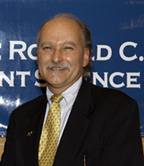 The Council of the American Association for the Advancement of Science (AAAS) announced on November 10, 2011, that Professor Barry A. Costa-Pierce, director of Rhode Island Sea Grant and professor of fisheries & aquaculture at the University of Rhode Island, has been elected as an AAAS Fellow. Dr. Costa-Pierce is also the chair-elect of Aquaculture without Frontiers (AwF).
Each year the Council elects Fellows whose “efforts on behalf of the advancement of science or its applications are scientifically or socially distinguished.” In the award letter, AAAS states that Costa-Pierce is being honored for “distinguished contributions to global aquaculture and its sustainability and for leadership in marine research, education, and outreach as director of two NOAA-Sea Grant college programs.”
“As a scientist, my first concern has always been how science works to directly benefit people, whether advancing commercial aquaculture to be more sustainable, or helping feed the world’s poor. As a Sea Grant director, my focus has been how new Sea Grant partnerships and institutions can make a real change in the state, in demonstrating credible impacts on the livelihoods of coastal peoples, and increasing stewardship of ocean resources for future generations. Election by the Council as an AAAS Fellow is extremely meaningful to me in recognizing these efforts,” Costa-Pierce says.